Introduction
Pregnancy changes how your body processes food. What felt safe before may now carry risks. Many expecting mothers unknowingly consume items that can harm their baby.
Understanding foods to avoid during pregnancy is not about fear. It is about making informed, simple choices daily.
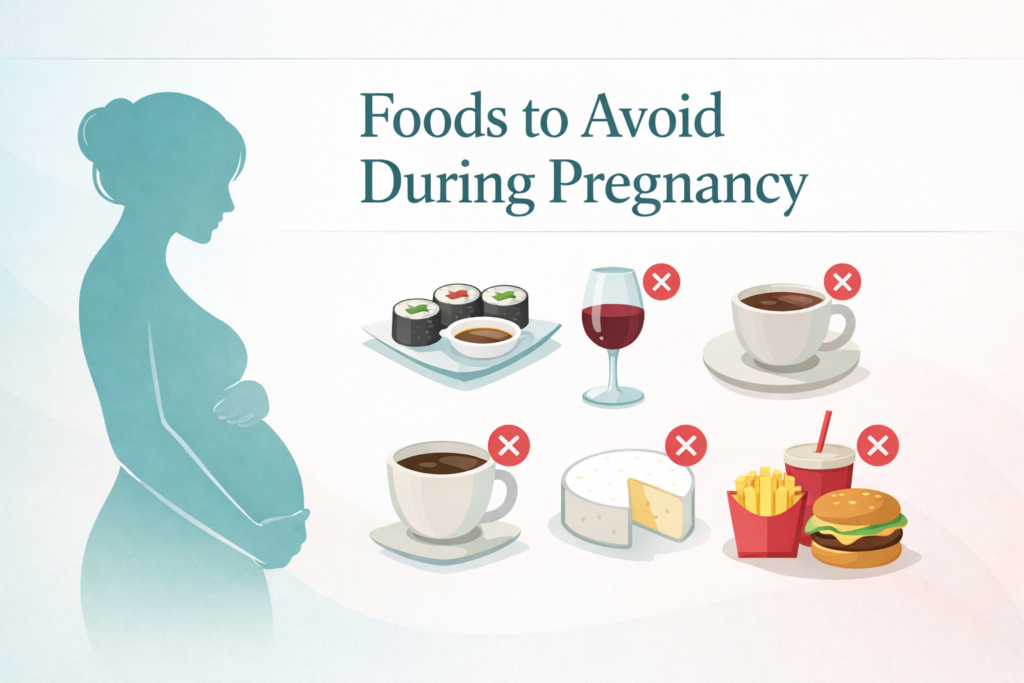
Certain foods increase the risk of infections, while others may affect the baby’s brain development. From raw seafood to common beverages, small mistakes can lead to complications.
At The Birthwave Gynecology and Children’s Clinic, we often see cases where awareness alone could prevent issues. This guide simplifies everything.
You will learn exactly what to avoid, why it matters, and what to choose instead.
Why Knowing Foods to Avoid During Pregnancy Matters
Pregnancy lowers your immune system’s strength. This makes your body more vulnerable to bacteria and parasites.
Some foods contain harmful organisms like:
- Listeria
- Salmonella
- Toxoplasma
These can lead to:
- Miscarriage
- Premature birth
- Low birth weight
- Developmental issues
A patient once came in with mild fever and fatigue. It turned out she consumed unpasteurized cheese. Early detection helped, but the risk was real.
Knowing foods to avoid during pregnancy reduces these risks significantly.
1. Raw or Undercooked Meat
Eating undercooked meat exposes you to dangerous bacteria and parasites.
Why it is risky
- Contains Toxoplasma and Salmonella
- Can cause severe infections
- Increases miscarriage risk
Common examples
- Rare steak
- Undercooked chicken
- Raw kebabs
What to do instead
Always cook meat thoroughly. Ensure no pink areas remain.
2. Raw or Undercooked Eggs
Raw eggs may contain Salmonella, which can cause food poisoning.
Where you find them
- Homemade mayonnaise
- Cake batter
- Soft scrambled eggs
Safer choice
Eat fully cooked eggs. Avoid runny yolks.
3. High Mercury Fish
Fish is healthy, but some types contain high mercury levels.
Avoid these fish
- Shark
- Swordfish
- King mackerel
Why it matters
Mercury affects the baby’s brain and nervous system.
Better options
- Salmon
- Sardines
- Tilapia
Limit fish intake to safe portions weekly.
4. Unpasteurized Milk and Dairy Products
Unpasteurized dairy can carry Listeria bacteria.
Risk involved
- Can cross the placenta
- May lead to miscarriage or stillbirth
Foods to avoid
- Raw milk
- Soft cheeses like brie and feta (if unpasteurized)
Safe alternative
Choose pasteurized milk and dairy products only.
5. Raw Seafood
Raw seafood may contain parasites and harmful bacteria.
Common sources
- Sushi
- Oysters
- Sashimi
Risk
- Food poisoning
- Infection transmission to baby
Recommendation
Eat only fully cooked seafood.
6. Processed Junk Foods
Highly processed foods offer little nutrition and may harm pregnancy health.
Issues with these foods
- High sugar content
- Excess salt
- Artificial additives
Impact
- Gestational diabetes risk
- Excess weight gain
Better choice
Focus on whole, fresh foods.
7. Excess Caffeine
Too much caffeine can affect fetal growth.
Sources of caffeine
- Coffee
- Tea
- Energy drinks
- Chocolate
Safe limit
Keep caffeine intake under 200 mg per day.
Why limit matters
High intake links to low birth weight and miscarriage.
8. Raw Sprouts
Raw sprouts may look healthy, but they often carry harmful bacteria.
Why they are risky
- Bacteria like Salmonella grow easily in moist conditions
- Washing does not remove all contamination
Common types
- Alfalfa sprouts
- Clover sprouts
- Radish sprouts
Safer option
Eat only well-cooked sprouts. Heat kills harmful bacteria effectively.
9. Unwashed Fruits and Vegetables
Fruits and vegetables are essential, but improper cleaning increases risk.
What can go wrong
- Pesticide residue
- Toxoplasma contamination from soil
Real concern
Even fresh produce can carry invisible parasites that affect fetal health.
Safe habit
Wash thoroughly under running water. Peel when possible.
10. Alcohol
Alcohol is one of the most critical foods to avoid during pregnancy.
Why it is dangerous
- Passes directly to the baby through the placenta
- Affects brain development
Possible outcomes
- Fetal alcohol syndrome
- Learning disabilities
- Growth issues
Recommendation
Avoid alcohol completely during pregnancy. There is no safe limit.
11. Unripe Papaya
Unripe or semi-ripe papaya contains latex compounds.
Risk factor
- May trigger uterine contractions
- Increases risk of miscarriage in early pregnancy
Important note
Fully ripe papaya is generally safe in moderation.
12. Pineapple (Excess Consumption)
Pineapple contains bromelain, which may soften the cervix.
Concern
- Excess intake may lead to early contractions
Practical advice
Small amounts are safe. Avoid frequent or large portions
13. Street Food and Unhygienic Meals
Street food often lacks proper hygiene standards.
Risks involved
- Bacterial contamination
- Food poisoning
- Waterborne infections
Case insight
We often see patients with stomach infections linked to outside food during pregnancy.
Better approach
Eat freshly cooked meals from clean, trusted sources.
14. Liver and Organ Meats
Liver contains very high amounts of vitamin A.
Why it matters
- Excess vitamin A may cause birth defects
Foods to limit
- Chicken liver
- Mutton liver
Recommendation
Avoid frequent consumption. Choose safer protein sources.
15. Packaged Juices and Soft Drinks
These drinks often contain excess sugar and preservatives.
Problems they cause
- Blood sugar spikes
- Increased gestational diabetes risk
Hidden issue
Many packaged juices are not truly fresh despite labeling.
Healthier alternative
Choose fresh homemade juices without added sugar.
Safe Eating Framework During Pregnancy
Understanding foods to avoid during pregnancy becomes easier with a simple framework:
Follow the “3S Rule”
- Safe: Pasteurized, cooked, fresh
- Simple: Minimal ingredients, less processing
- Sanitized: Clean hands, utensils, and ingredients
Daily checklist
- Cook food thoroughly
- Avoid raw and processed items
- Wash produce properly
- Limit caffeine intake
- Stay hydrated
This approach reduces confusion and builds consistent habits.
Conclusion
Pregnancy does not require a complicated diet. It requires awareness and consistency.
Knowing foods to avoid during pregnancy helps prevent infections, complications, and developmental risks. Most harmful foods are easy to identify and replace with safer options.
At The Birthwave Gynecology and Children’s Clinic, we believe small daily decisions shape a healthy pregnancy journey. Focus on clean, cooked, and balanced meals.
When in doubt, choose safety over convenience. Your body and your baby will benefit from it.
FAQs
1. What are the most dangerous foods to avoid during pregnancy?
Raw meat, high-mercury fish, unpasteurized dairy, alcohol, and raw seafood are the most dangerous. These foods increase the risk of infections and developmental issues. Avoiding them significantly improves pregnancy safety and outcomes.
2. Can I drink coffee during pregnancy?
Yes, but limit intake. Keep caffeine under 200 mg per day. Excess caffeine may lead to low birth weight and complications. Moderation is key when managing foods to avoid during pregnancy.
3. Is it safe to eat fruits during pregnancy?
Yes, fruits are essential. However, always wash them properly to remove pesticides and bacteria. Avoid unwashed produce to reduce infection risks during pregnancy.
4. Why is unpasteurized dairy unsafe during pregnancy?
Unpasteurized dairy may contain Listeria, a harmful bacteria. It can cross the placenta and harm the baby. Always choose pasteurized products to stay safe.
5. Are all fish unsafe during pregnancy?
No, only high-mercury fish should be avoided. Safe options like salmon and sardines provide essential nutrients. Choose wisely and limit portions.